Temblor
Sebastián Riffo
La obra presentada por Rafael Guendelman-Hales en el contexto de la bienal llevó por título Dos rábanos en la familia es mucho (2017), investigación que ahonda sobre los secuestros de su madre, Carmen Andrea Hales Dib, llevados a cabo por la Dirección de Comunicaciones de Carabineros (DICOMCAR) el año 1985, período en el que fue secuestrada tres veces, posterior al caso degollados. Los secuestros fueron orquestados en presión a su abuelo, el abogado Alejandro Hales, ex ministro de Estado en los gobiernos del general Carlos Ibáñez y de Eduardo Frei, quién, en ese momento, investigaba unas compras de terrenos –de dudosa legalidad– del General Augusto Pinochet Ugarte, episodio histórico conocido bajo el título del caso Melocotón. Pese a haber sido encapuchada, su madre logra grabar mentalmente el trayecto del secuestro, mediante un sistema de contabilidad nemotécnico que la obligó a mantener el control absoluto de sus emociones y focalizar toda su atención en los sucesivos giros que realizada el móvil en el que se encontraba apresada. Así, gracias a este ejercicio de orientación, memoria y supervivencia, pudo, posteriormente, recrear el trayecto y dejar en evidencia a carabineros.
En concreto, esta obra es un vídeo que analiza el primer secuestro de su madre en el que fue llevada encapuchada en un auto desde la esquina de su casa –donde se disponía para tomar un taxi– hasta la comisaría de las Tranqueras, Las Condes, Santiago. Incluye entrevistas y material audiovisual del programa Teleanálisis de 1985, en el que se aborda su secuestro con diferentes entrevistas a sus familiares. En este sentido, inaugura el vídeo la imagen del artista mirando un mapa de Santiago, sobre éste dispone un papel diamante para calcar con un lápiz la ruta del secuestro en el sector oriente. Este proceso significará el inicio de un viaje real hacia las profundidades de un acontecimiento dramático. Luego, se profundizará en las referencias específicas del título de la obra, las que forman parte de las amenazas que le hicieron llegar a su madre, cuyo enunciado completo es ciertamente más aterrador: “Dos rábanos en la familia es mucho - Te vamos a dejar en pedazos por ahí. La cara en Grecia y el resto en Quirihue”. Según el vídeo, a mediados de los 60, el apelativo de rábano se les acuñaba peyorativamente a las personas de izquierda menos radicalizadas y que no defendían la revolución bajo la vía radical armada. Sin embargo, su uso se remonta a los procesos de depuración selectiva de las colectividades del partido comunista de la Unión Soviética de mediado de los años 20. Luego, se ve a su madre conduciendo un auto, cuyo objetivo es rememorar su desdichado viaje, pero ahora voluntariamente y con la ayuda de Google Maps, una de las herramientas más populares de geolocalización mundial, contraponiendo, de este modo, su memoria implícita o corporal, con la eficiencia técnica de la máquina. Para llevar a cabo esto, fue preciso que la madre del artista recordara lo sucedido, lo que, más allá de ser un ejercicio meramente cognitivo, implicó un delicado proceso de afectividad, en el que el recordar significó volver a hacer pasar por el corazón todo lo acontecido. En este proceso, el vídeo da cuenta de cómo las pérdidas de las referencias geográficas perjudican los vínculos afectivos y emocionales con el territorio.

Earthquake
Sebastián Riffo
The work presented by Rafael Guendelman-Hales as part of the biennial was titled Two Radishes in the Family Is Too Much (2017), a project that delves into the kidnappings of his mother, Carmen Andrea Hales Dib, carried out by the Carabineros Communications Directorate (DICOMCAR) in 1985, a period during which she was abducted three times, following the “degollados” case. The abductions were orchestrated to pressure her grandfather, attorney Alejandro Hales, a former minister of state in the administrations of General Carlos Ibáñez and Eduardo Frei, who, at that time, was investigating land purchases—of dubious legality—by General Augusto Pinochet Ugarte, a historical episode known as the “Melocotón” case. Despite having been hooded, her mother managed to mentally record the route of the kidnapping using a mnemonic accounting system that forced her to maintain absolute control over her emotions and focus all her attention on the successive turns made by the vehicle in which she was held captive. Thus, thanks to this exercise in orientation, memory, and survival, she was later able to reconstruct the route and expose the police.
![]()
Specifically, this work is a video that examines the first kidnapping of his mother, during which she was taken, hooded, in a car from the corner of her house—where she was waiting to take a taxi—to the Tranqueras police station in Las Condes, Santiago. It includes interviews and audiovisual material from the 1985 program Teleanálisis, which covers her kidnapping through various interviews with her family members. In this vein, the video opens with an image of the artist looking at a map of Santiago; on top of it, he places graph paper to trace the route of the kidnapping in the eastern sector with a pencil. This process marks the beginning of a real journey into the depths of a dramatic event. Next, we will delve into the specific references in the work’s title, which are part of the threats sent to his mother; the full statement is certainly more terrifying: “Two radishes in the family is too many—we’re going to leave you in pieces out there. The face in Greece and the rest in Quirihue.” According to the video, in the mid-1960s, the term “radish” was used pejoratively to refer to less radicalized leftists who did not defend the revolution through radical armed struggle. However, its use dates back to the selective purges carried out by the Communist Party of the Soviet Union in the mid-1920s. Then, we see his mother driving a car, with the aim of recalling her ill-fated journey, but now voluntarily and with the help of Google Maps, one of the most popular global geolocation tools, thus contrasting her implicit or bodily memory with the technical efficiency of the machine. To carry this out, the artist’s mother had to recall what had happened, which, beyond being a purely cognitive exercise, involved a delicate process of affectivity, in which remembering meant reliving everything that had occurred in her heart. In this process, the video illustrates how the loss of geographical references undermines affective and emotional ties to the territory.
The work presented by Rafael Guendelman-Hales as part of the biennial was titled Two Radishes in the Family Is Too Much (2017), a project that delves into the kidnappings of his mother, Carmen Andrea Hales Dib, carried out by the Carabineros Communications Directorate (DICOMCAR) in 1985, a period during which she was abducted three times, following the “degollados” case. The abductions were orchestrated to pressure her grandfather, attorney Alejandro Hales, a former minister of state in the administrations of General Carlos Ibáñez and Eduardo Frei, who, at that time, was investigating land purchases—of dubious legality—by General Augusto Pinochet Ugarte, a historical episode known as the “Melocotón” case. Despite having been hooded, her mother managed to mentally record the route of the kidnapping using a mnemonic accounting system that forced her to maintain absolute control over her emotions and focus all her attention on the successive turns made by the vehicle in which she was held captive. Thus, thanks to this exercise in orientation, memory, and survival, she was later able to reconstruct the route and expose the police.
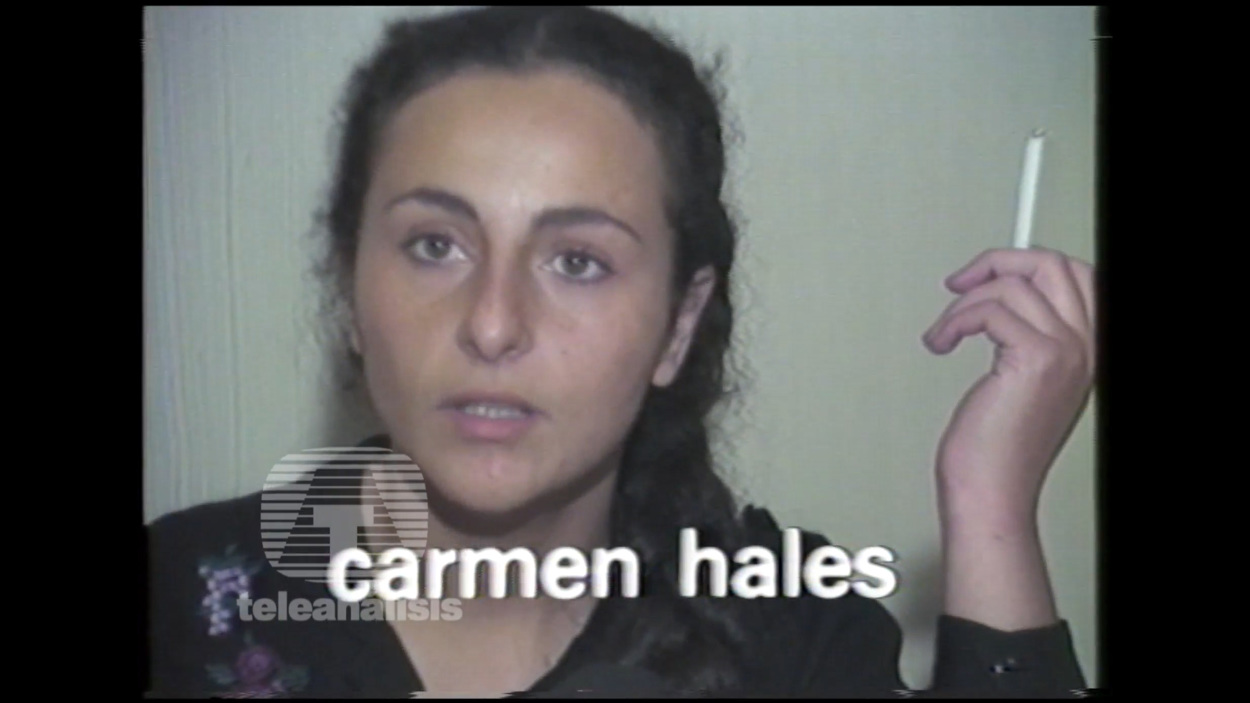
Specifically, this work is a video that examines the first kidnapping of his mother, during which she was taken, hooded, in a car from the corner of her house—where she was waiting to take a taxi—to the Tranqueras police station in Las Condes, Santiago. It includes interviews and audiovisual material from the 1985 program Teleanálisis, which covers her kidnapping through various interviews with her family members. In this vein, the video opens with an image of the artist looking at a map of Santiago; on top of it, he places graph paper to trace the route of the kidnapping in the eastern sector with a pencil. This process marks the beginning of a real journey into the depths of a dramatic event. Next, we will delve into the specific references in the work’s title, which are part of the threats sent to his mother; the full statement is certainly more terrifying: “Two radishes in the family is too many—we’re going to leave you in pieces out there. The face in Greece and the rest in Quirihue.” According to the video, in the mid-1960s, the term “radish” was used pejoratively to refer to less radicalized leftists who did not defend the revolution through radical armed struggle. However, its use dates back to the selective purges carried out by the Communist Party of the Soviet Union in the mid-1920s. Then, we see his mother driving a car, with the aim of recalling her ill-fated journey, but now voluntarily and with the help of Google Maps, one of the most popular global geolocation tools, thus contrasting her implicit or bodily memory with the technical efficiency of the machine. To carry this out, the artist’s mother had to recall what had happened, which, beyond being a purely cognitive exercise, involved a delicate process of affectivity, in which remembering meant reliving everything that had occurred in her heart. In this process, the video illustrates how the loss of geographical references undermines affective and emotional ties to the territory.
